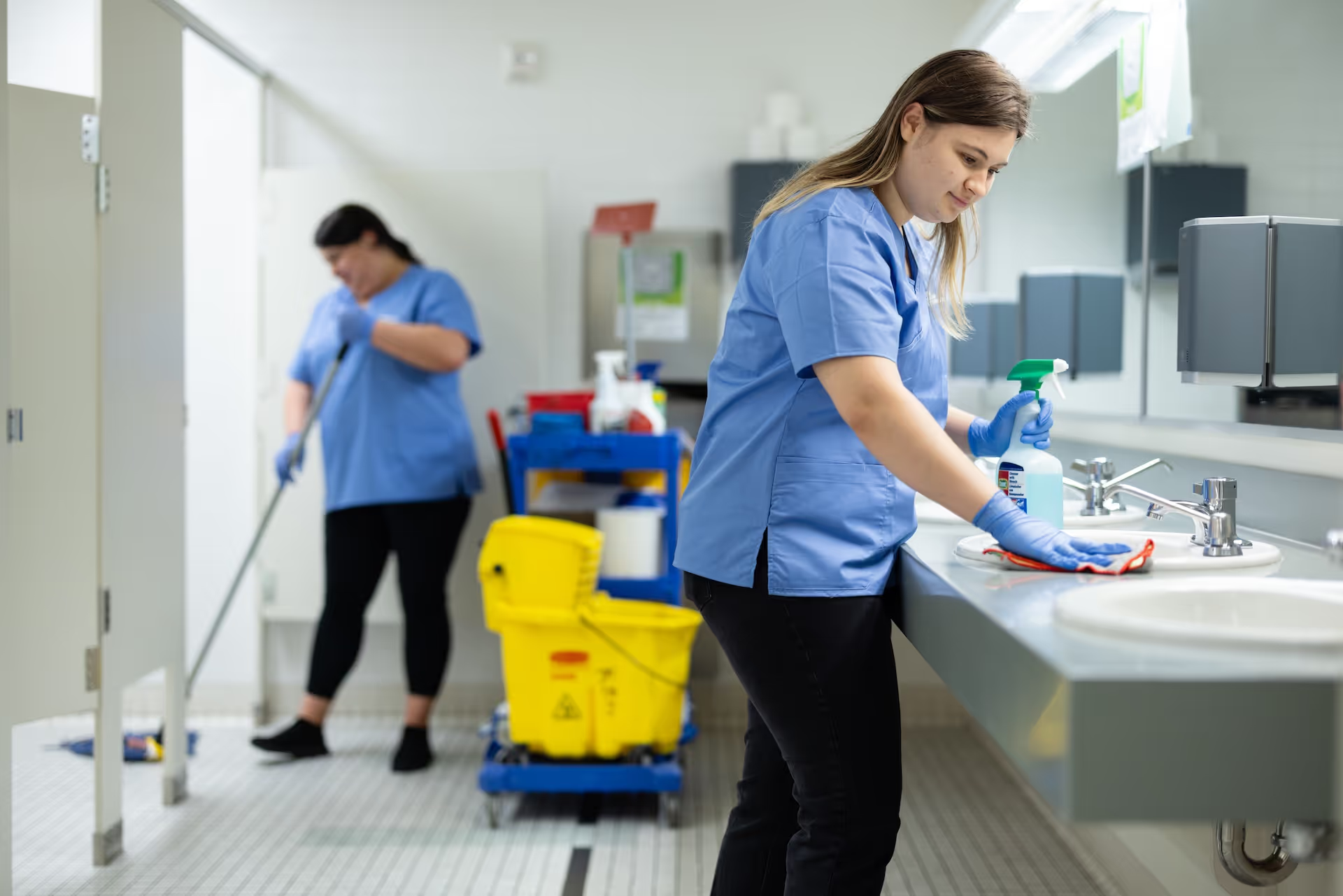
Hospital Janitorial Services: What EVS Support Really Means
Hospital janitorial services explained: what EVS covers, what to outsource, scope boundaries, and inspection-ready documentation. Request a walkthrough.

Janitorial. EVS. Housekeeping. In healthcare, these terms often get used interchangeably.
Until something goes wrong. Or an audit is coming. Or a unit is short-staffed and everyone suddenly needs the scope in writing.
If you oversee a hospital, clinic, or outpatient facility, this matters because cleaning is not just a service. It’s a system.
And systems need clear ownership.
By the end of this article, you’ll know (1) what EVS usually covers, (2) what can be outsourced, and (3) what documentation and handoffs matter most when you bring in a hospital janitorial services partner.
EVS vs hospital janitorial services: what’s the difference?
EVS and “hospital janitorial services” often look the same from the hallway. But operationally, they’re not the same thing.
EVS (Environmental Services) is the function responsible for environmental hygiene in a healthcare setting. In other words the cleaning and disinfection practices that support infection prevention and safe patient care.
That includes the training, workflows, and quality checks that make cleaning consistent across shifts, units, and risk levels.
Hospital janitorial services is a broader service category.
Some facilities deliver janitorial fully in-house through EVS. Others supplement EVS with contractors to cover staffing gaps, specialty projects, or certain areas.
This distinction matters because it determines accountability: who is trained on what, who documents what, and who owns the handoffs when a space changes status (occupied to discharged, standard precautions to isolation, routine to urgent).
What EVS typically owns (and why it’s more than “cleaning”)
At most facilities, EVS ownership is tied to risk: patient proximity, clinical workflow, and surfaces that can transmit pathogens if they’re missed. In other words, EVS is where cleaning meets infection prevention.
While every hospital’s policies vary, EVS commonly owns:
- Patient rooms and bathrooms (daily cleaning plus discharge or terminal-style cleaning per facility policy)
- Clinical areas, common areas, and public restrooms
- High-touch surfaces with risk-based frequencies (patient zone vs lower-touch areas)
- Waste handling and transport support (as defined by hospital policy and local requirements)
EVS work is usually built around documented routines, sequencing, and checks—because “looks clean” is not the same as “managed clean.”
What hospitals commonly outsource (3 models)
Outsourcing can work extremely well in healthcare—when it’s treated like an extension of your operating system, not a plug-and-play vendor swap.
Most hospitals outsource in one of three patterns:
1) Supplemental staffing
This is the “fill the gaps” model: nights and weekends, surge periods, vacancies, leaves, and seasonal spikes.
The goal isn’t to redesign your EVS program. It’s to stabilize coverage without overloading your core team. The best outcomes happen when the vendor inherits your standards, checklists, and supervision cadence—rather than improvising in the field.
2) Specialty projects
These are defined, scheduled tasks that require special equipment or extra labor, such as:
- Floor restoration and refinishing
- High dusting and detail cleaning
- Deep cleans by schedule or after disruptions
- Turnover support during peak census periods
Projects are where you can win back capacity for your in-house EVS team—if scope, timing, and acceptance criteria are crystal clear.
3) Dedicated zones
Some facilities assign contractors to administrative buildings, non-clinical space, or select wings—with strict scope boundaries and clear “line in the sand” rules.
This model tends to succeed when it’s obvious where vendor responsibility starts and stops, and when the hospital retains strong oversight in any space adjacent to patient care.
Bottom line: outsourcing success is less about the model and more about the management. Scope clarity and oversight are the difference between “helpful support” and “constant rework.”
The “line in the sand” – scope boundaries to clarify in writing
If you only do one thing before hiring or expanding hospital janitorial services, do this: write down your boundaries like you’re handing them to a brand-new supervisor on day one.
Here’s a checklist that keeps scopes clean and defensible:
- Who touches clinical equipment vs who cleans around it?
Define the “around” zone so there’s no confusion in patient care areas. - Who handles biohazard and sharps containers?
Often staff-managed and highly policy-dependent. Spell it out. - Who controls chemicals, dwell times, and where products are stored?
If the vendor brings products, you still need compatibility and control. - What are the access rules?
Badging, restricted areas, escort requirements, and unit-level permissions. - What is the escalation path for spills, isolation rooms, and urgent needs?
Define what triggers immediate response versus the next scheduled clean.
This is the operational truth: most “cleaning issues” are actually scope issues. You fix them with clarity, not arguments.
Documentation that matters: what “inspection-ready” tends to look like
If you can produce the right documents quickly, you’re in a better place—during audits, leadership reviews, and the inevitable “what happened on third shift?” questions.
A practical inspection-ready documentation set usually includes:
- Written scopes, checklists, and frequencies by area and risk level
- Training records for role-specific cleaning and disinfection procedures
- Quality inspections (walkthrough results, checklists, corrective actions, rechecks)
- Chemical documentation, including access to manufacturer Instructions for Use (IFUs) for proper dilution, contact time, and surface compatibility
Many facilities align their EVS programs with common accreditation expectations by maintaining clear policies, role-based training, and ready access to cleaning and disinfection instructions (like IFUs)—so practices are consistent and auditable.
And when you bring in a vendor, you’re not just buying labor. You’re buying the ability to prove the work was performed the way your facility requires.
See our full guide to audit-ready documentation here.
Handoffs with facility leadership: the part that prevents dropped balls
Even strong scopes fail when information doesn’t move cleanly between people. EVS support lives and dies by handoffs.
A reliable handoff system usually includes:
Single point of contact on both sides
You want one accountable lead internally (EVS, Facilities, Infection Prevention, or a coordinated team) and one accountable supervisor from the vendor.
That doesn’t eliminate collaboration. It eliminates confusion.
A communication rhythm that matches your risk
- Daily notes for staffing gaps, priority rooms, and urgent issues
- Weekly QA touchpoints to review trends and corrective actions
- Monthly reviews for scope changes, staffing stability, and performance metrics
Clear escalation rules
Define what triggers same-day response, what can wait, and what requires leadership involvement. The fastest way to lose confidence in a vendor is ambiguity during urgent events.
Change management
New units, remodeling, patient population shifts, and outbreak response can all change cleaning frequency and priorities. The question is not if your scope will change—it’s how quickly your vendor can absorb changes without drift.
If you want the relationship to feel calm, build a system that catches problems early—before they become complaints.
Vendor scorecard: 10 questions to ask before you hire
These questions are designed to surface whether a vendor can truly support EVS-level expectations—not just show up with a mop and a schedule.
- How do you define EVS support vs janitorial on a hospital site?
- What healthcare-specific training do you provide for new hires and float staff?
- How do you train and reinforce high-touch prioritization and risk-based frequencies?
- What documentation can you provide in the first 30 days?
- How do you ensure chemicals are used per IFU (dilution, contact time, compatibility)?
- How do you QA work—what gets inspected, how often, and how are misses corrected?
- How do you handle staffing reliability (call-outs, backfill, surge coverage)?
- What are your scope boundary rules for clinical equipment, isolation rooms, and restricted areas?
- How do you communicate with facility leadership (daily updates, weekly QA, monthly reviews)?
- How do you manage change when units open, workflows shift, or priorities change fast?
A good vendor won’t just answer these. They’ll show you the templates, checklists, and reporting you’ll actually live with.
Conclusion
Hospital janitorial services only work in healthcare when they function like EVS support: defined scope, trained staff, documented processes, and consistent quality checks. EVS is not a task list—it’s an operating system for environmental hygiene.
Your key decision is what to keep in-house and what to outsource. And the fastest way to make outsourcing successful is to get ruthless about scope boundaries, documentation, and handoffs.
If you want a clean, inspection-ready program that does not rely on heroics, start with a walkthrough and a scope review—then build the relationship on what’s written, trained, and measured.
FAQ
What is EVS in a hospital?
EVS (Environmental Services) is the hospital function responsible for cleaning, disinfection, and environmental hygiene that supports infection prevention. It typically covers patient areas, clinical spaces, common areas, and high-touch surfaces using defined procedures and quality checks.
EVS meaning in a hospital—what does it stand for?
EVS stands for Environmental Services. In healthcare, it refers to teams and programs focused on keeping the care environment clean and hygienic through consistent cleaning and disinfection practices.
Is EVS the same as janitorial?
Not exactly. Janitorial is a broad term for cleaning services, while EVS in hospitals generally includes stronger ties to infection prevention, documented workflows, and healthcare-specific training and quality oversight.
Can hospital janitorial services be outsourced? What’s typical?
Yes. Many facilities outsource supplemental staffing, specialty projects (like floor restoration or deep cleans), or dedicated non-clinical zones. Outcomes depend on tight scope definitions, clear boundaries, and consistent oversight.
What documentation should a hospital cleaning vendor provide?
At minimum: written scopes and frequencies, area checklists, training records, quality inspection results and corrective actions, and chemical documentation including access to manufacturer IFUs for proper use (dilution, contact time, compatibility).
What should be cleaned most often in patient care areas?
High-touch surfaces should be prioritized with risk-based frequency, especially in the patient zone. The most effective programs define what “high-touch” means for each area and audit performance consistently.
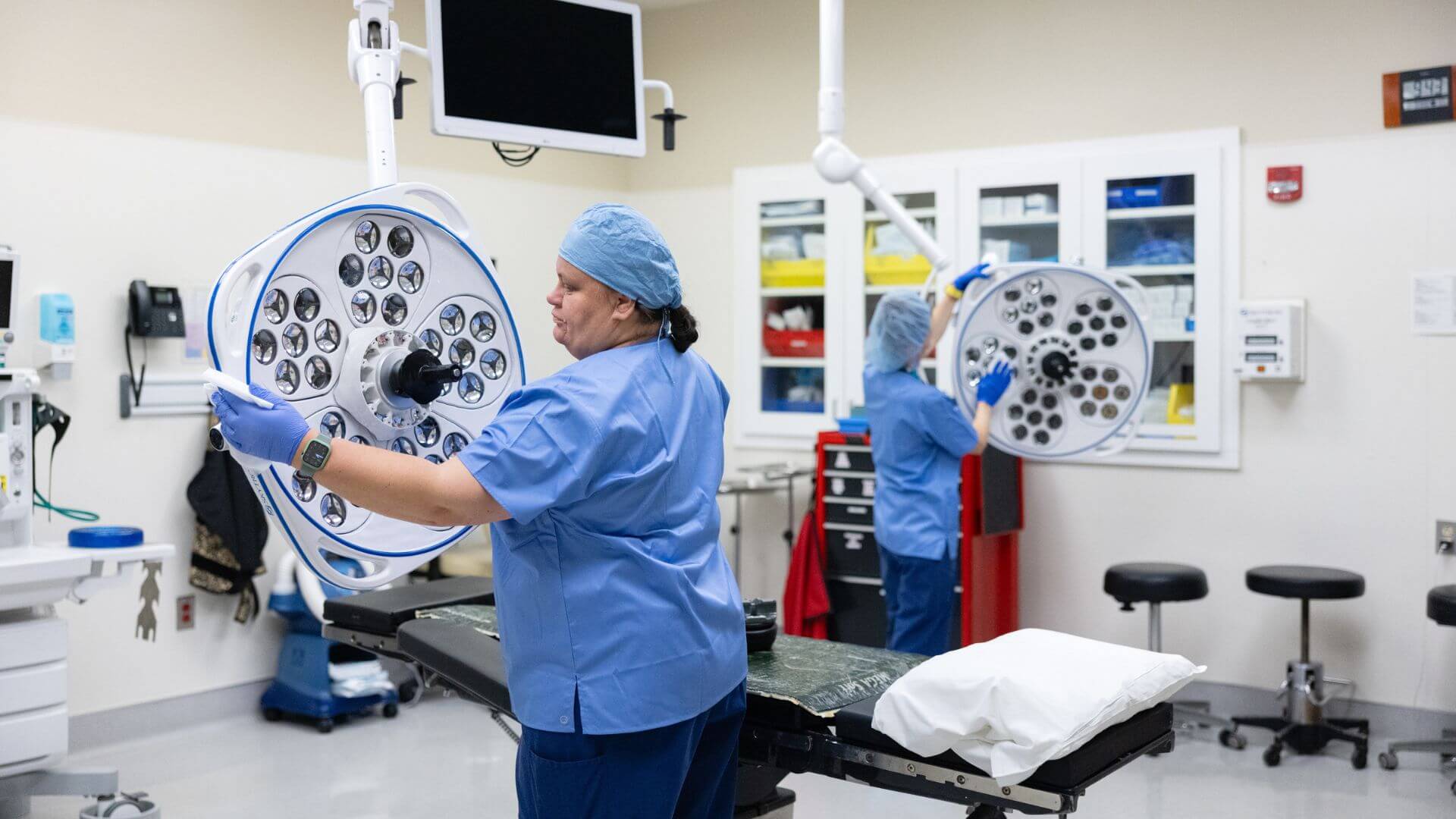
Learn what ambulatory surgery center cleaning should include, how to define responsibilities, and what to require for reliable, audit-ready service.
Read More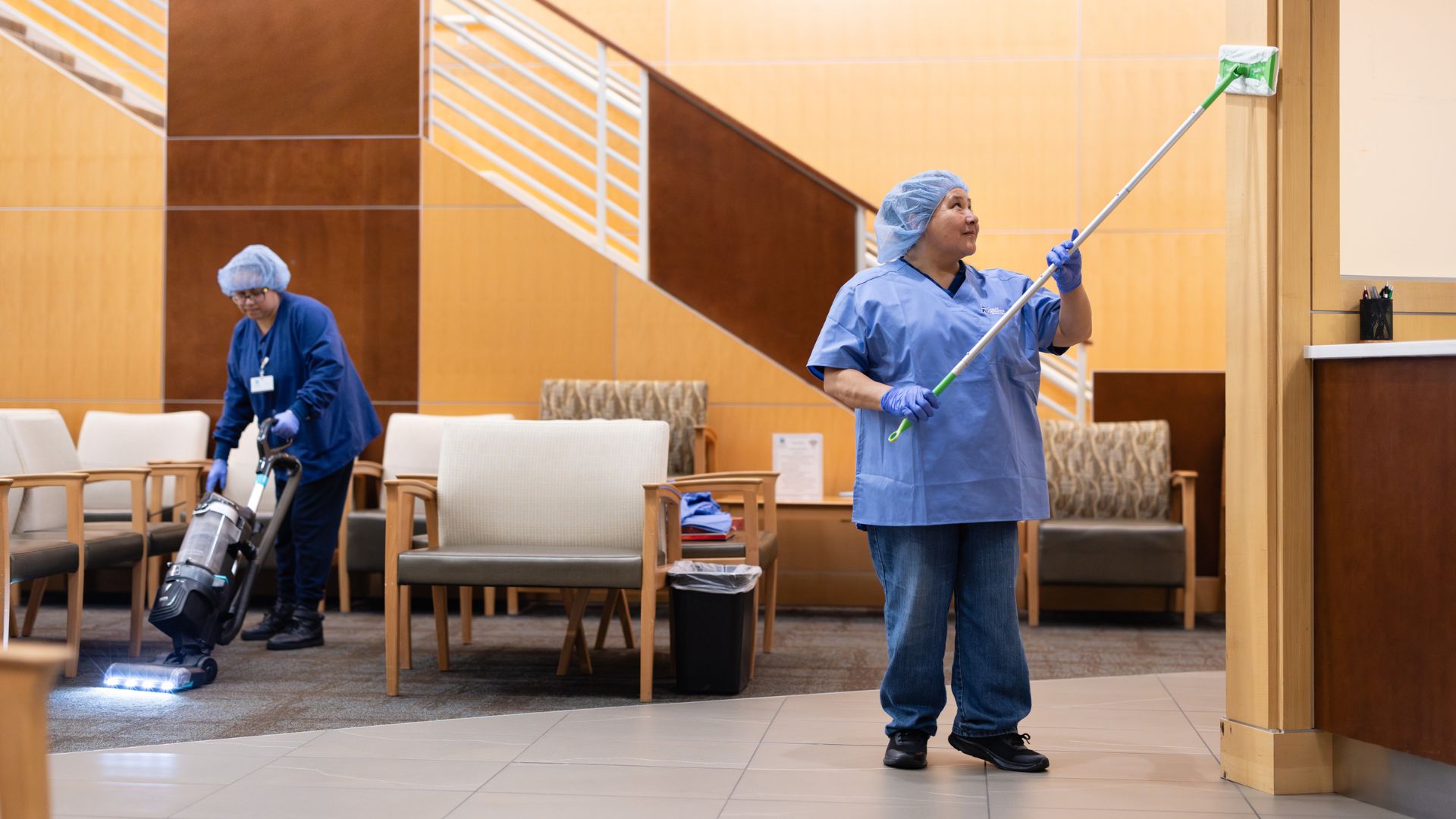
Learn what medical office cleaning costs in the Seattle area, what affects your quote, and how to compare proposals for dependable healthcare cleaning.
Read More
Learn how trained staff, clear protocols, fast response, and documented quality help Seattle healthcare facilities stay clean and ready. Schedule a site walk.
Read More
Looking for commercial cleaning services in Seattle? Learn how a dependable janitorial partner makes your life easier, from daily cleaning to QA and communication.
Read More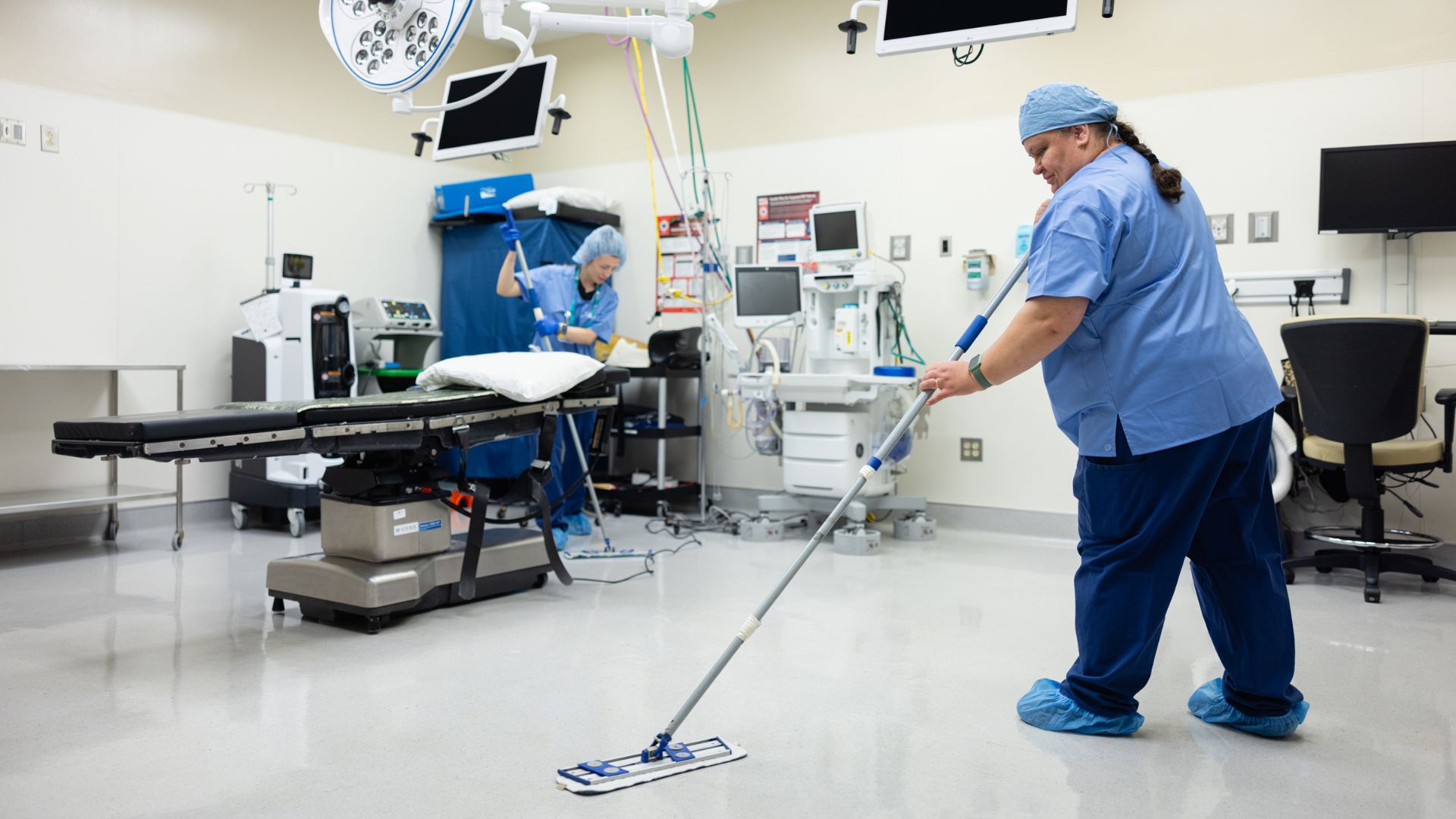
Learn what terminal cleaning means in healthcare, when it is needed, what it includes, and what to require from a medical cleaning vendor.
Read More
Learn what audit-ready healthcare cleaning documentation should include, from schedules and SOPs to training records, QA logs, and corrective actions.
Read More
Learn what HIPAA-compliant cleaning really means for medical offices and clinics, including vendor access rules, privacy safeguards, incident protocols, and what to require.
Read More
Hiring medical office cleaning services in Seattle? Use this checklist for scope, high-touch disinfection, turnover handoffs, logs, and QA. Request a site walk.
Read More
Best practices for clinic cleaning services: high-touch priorities, waiting rooms, restrooms, shared equipment boundaries, and checklists. Request a site walk.
Read MoreHospital janitorial services explained: what EVS covers, what to outsource, scope boundaries, and inspection-ready documentation. Request a walkthrough.
Read MoreGet 100%
Dependable
Cleaning
Make the switch to a professional janitorial team that comes through for you every time. No more missed cleans or constant turnover. Schedule a site walk today and make cleaning stress a thing of the past.