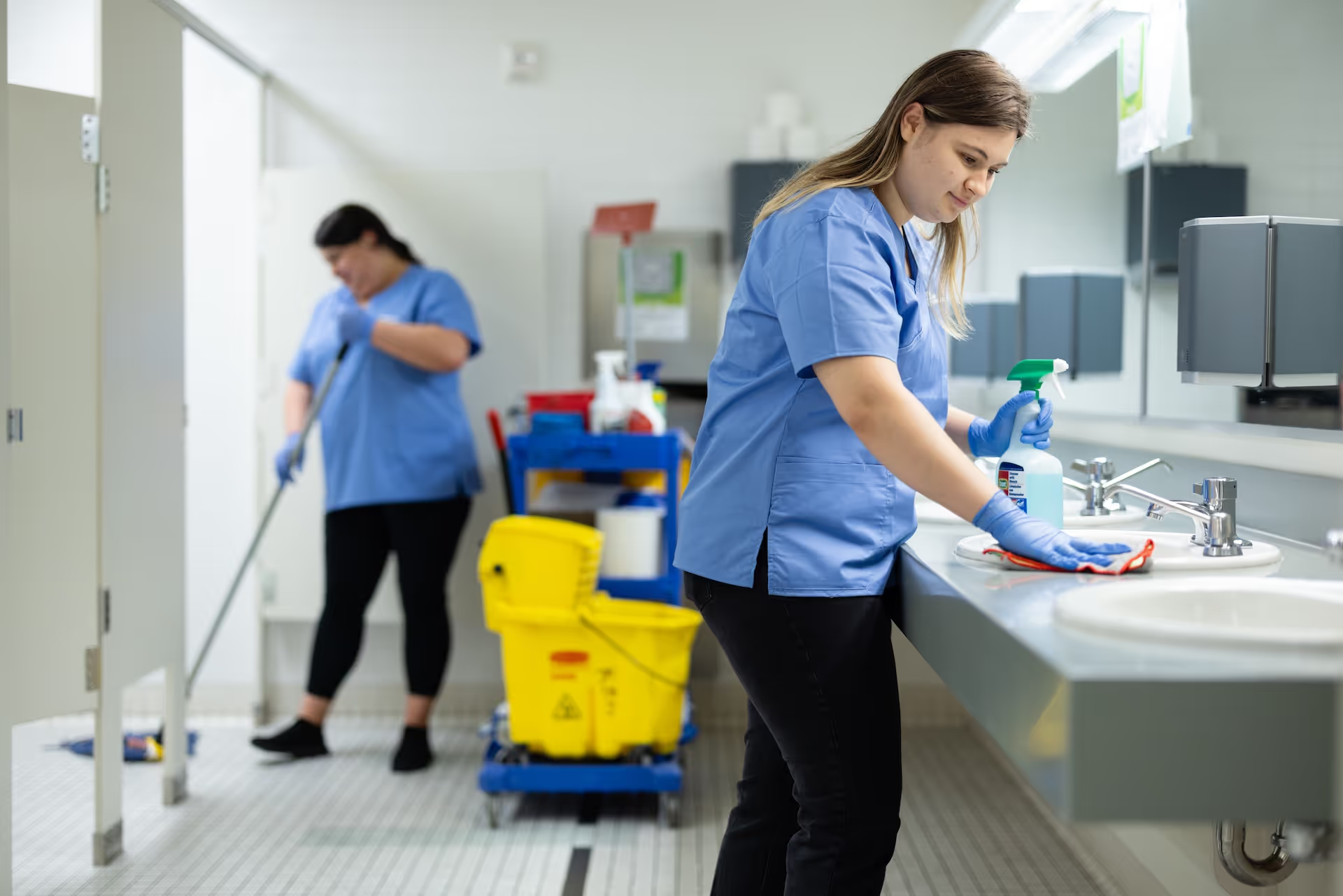
Ambulatory Surgery Center Cleaning: What ASCs Should Require From a Janitorial Partner
Learn what ambulatory surgery center cleaning should include, how to define responsibilities, and what to require for reliable, audit-ready service.
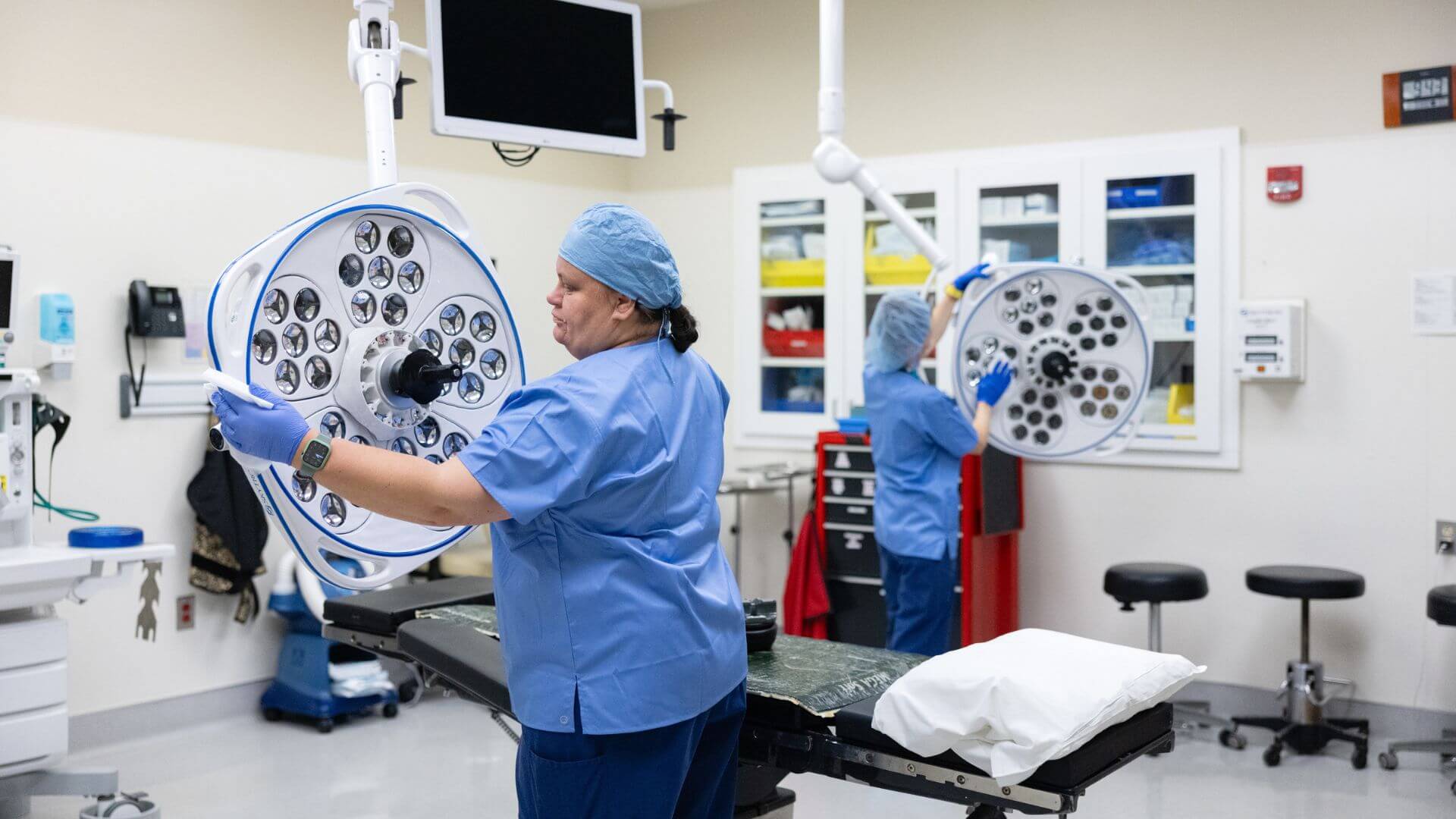
A surgery center can look spotless but still have gaps in its cleaning program.
Often the problem comes down to unclear ownership: who cleans the anesthesia cart, who handles the floor between cases, and how the terminal clean is documented.
When those answers aren’t written down, important work can fall between clinical staff and the janitorial team.
We work with many Seattle and Puget Sound healthcare facilities to deliver 100% dependable cleaning.
This guide shows you how a strong ambulatory surgery center cleaning program needs more than a list of tasks. It needs a site-specific plan that defines the scope, schedule, responsibilities, products, documentation, and response when something doesn’t go as expected.
What should ambulatory surgery center cleaning include?
At a minimum you want your ASC cleaning program to identify:
- Which rooms, surfaces, and equipment are included
- When each task must be completed
- Who is responsible for completing it
- Which products and procedures must be used
- How the work is documented and inspected
- How spills, missed tasks, and other issues are escalated
These requirements should reflect your facility’s infection-control plan, plus the applicable regulations, accreditor expectations, and manufacturer instructions.
A cleaning company supports that program, but it doesn’t replace the facility’s infection-prevention leadership or guarantee compliance.
Why surgery centers need a specialized cleaning plan
Surgical and procedural spaces introduce unique risks, workflows, and responsibilities.
Federal Conditions for Coverage for ambulatory surgical centers require an ASC to maintain an infection-control program and provide a sanitary environment for surgical services.
Here in Washington, ambulatory surgical facilities are required to maintain a written infection-control and surveillance program. The requirements specifically address environmental management, housekeeping, approved disinfectants, and cleaning surgical areas before, between, and after use.
The practical takeaway is that the cleaning scope should be built around the facility’s actual procedures and daily workflow. A generic commercial-cleaning checklist won’t provide enough detail.
Organize the cleaning plan around four cleaning windows
A clear ASC cleaning plan distinguishes among four different cleaning windows.
Before the first procedure
The facility’s policy should define what must happen before the surgical day begins. This may include confirming that the previous terminal clean was completed, inspecting the room, and addressing dust or other visible conditions before equipment and patients enter the space.
The plan should also state who performs the check and what happens if the room isn’t ready.
Between procedures
Between-case cleaning happens under significant time pressure. Clinical and environmental cleaning teams may share responsibilities, making this one of the most important places to eliminate assumptions.
The facility should specify who handles environmental surfaces, floors, waste, portable equipment, and other assigned items. The plan should also address blood or body-fluid spills and conditions that require additional cleaning or escalation.
After the final procedure
End-of-day terminal cleaning in healthcare is more comprehensive than a between-case clean. The exact scope should follow the facility’s policies, but it commonly addresses assigned high- and low-touch surfaces, fixed equipment, mobile equipment surfaces, scrub areas, sinks, and the complete floor.
The scope should be specific enough that a cleaner can complete it consistently and a supervisor can verify the result.
Daily and periodic cleaning
The plan also needs to cover spaces and tasks outside the immediate surgical schedule. These may include waiting rooms, restrooms, offices, recovery areas, staff spaces, vents, walls, baseboards, and other periodically cleaned surfaces.
Rather than relying on memory, assign each task a frequency and document who owns it.
Give every surface and task an owner
The strongest ASC cleaning programs leave very little open to interpretation.
For each room, ask: Which surfaces belong to clinical staff? Which belong to the janitorial team? Who cleans portable equipment? Who removes waste? Who responds to spills? Who verifies that the work is finished?
Critical and semicritical medical devices require specialized reprocessing and shouldn’t quietly become part of a janitorial scope. Responsibilities for sharps, regulated medical waste, linens, and patient-care equipment also need to be defined rather than assumed.
A written responsibility matrix can prevent important items from falling between teams. It can also make training, inspections, and corrective action much easier.
Access deserves the same clarity. The facility should establish rules for keys, badges, restricted rooms, alarms, and patient information. KBM’s guide to HIPAA-compliant cleaning explains what privacy-aware janitorial practices should look like in healthcare settings.
Require the right products and methods
Using a hospital-grade disinfectant isn’t enough by itself. The product must be appropriate for the surface, use site, and organism of concern, and staff must follow its label.
The EPA’s disinfectant guidance emphasizes several details that matter in practice:
- Confirm the product’s EPA registration number
- Check that the intended use site appears on the label
- Follow the required dilution and application instructions
- Observe the stated contact time
- Keep the surface visibly wet for that entire contact time
That last point is easy to miss. Wiping a surface and immediately drying it may prevent the disinfectant from working as intended.
The cleaning plan should also address appropriate PPE, product safety information, tool management, and blood or body-fluid procedures. When occupational exposure is possible, the employer’s procedures must align with OSHA’s Bloodborne Pathogens standard.
Make documentation part of the work
Good documentation doesn’t make a facility compliant on its own. It does make responsibilities and performance easier to see.
A well-managed program should have:
- A current scope of work organized by room or area
- Site-specific procedures and cleaning schedules
- Checklists or logs for required tasks
- Product and safety documentation
- Training and competency records
- Inspection and corrective-action records
Documentation should be usable, not ceremonial. Staff need to understand it, supervisors need to review it, and facility leaders need to be able to retrieve it when questions arise.
For a closer look, see our guide to audit-ready healthcare cleaning documentation.
Evaluate reliability as carefully as technical knowledge
A sound protocol won’t help if the assigned cleaner misses a shift and no one provides coverage.
When evaluating hospital and surgery center cleaning services, look closely at how the company manages people and problems. Ask who supervises the work, how backup coverage is handled, and how quickly someone will respond when your needs change.
Surgical schedules don’t always follow the original plan. A dependable janitorial partner needs enough staffing, communication, and flexibility to adjust without leaving the facility scrambling.
You should also know who your point of contact will be. If an issue arises after hours, the process for reporting and resolving it should already be clear.
Questions to ask an ASC cleaning company
Before selecting a provider, ask:
- What experience do you have in surgery centers or procedural facilities?
- How do you divide responsibilities between your staff and the clinical team?
- How are cleaners trained for this specific facility?
- What happens when an assigned employee is absent?
- What cleaning and inspection records will we receive?
- How do you respond when a task is missed or the schedule changes?
A capable provider should answer these questions specifically. Be cautious if you hear broad assurances without clear procedures behind them.
Start with a site-specific cleaning scope
The right cleaning program reflects the way your facility actually operates. It identifies every important task, gives that task an owner, and makes completion easy to verify.
Kelly Building Maintenance has served healthcare, commercial, and industrial facilities across Seattle, Kitsap, and the South Sound since 1986. Our medical cleaning services are built around dependable staffing, clear communication, and the requirements of each facility.
If you’re reviewing your current ASC cleaning program or comparing janitorial providers, schedule a free site walk. We’ll walk through the facility with you and discuss the scope, schedule, and support you need.
Frequently asked questions
What does ambulatory surgery center cleaning include?
The scope may include surgical and procedural areas, pre-op and recovery spaces, waiting rooms, restrooms, offices, staff areas, and other assigned spaces. Exact tasks and frequencies should follow the facility’s infection-control policies and written cleaning plan.
Who is responsible for cleaning an operating room?
Responsibility is often shared between clinical personnel and environmental cleaning staff. The facility should clearly document who cleans each surface, piece of equipment, and area before, between, and after procedures.
What’s the difference between between-case and terminal cleaning?
Between-case cleaning prepares the room for the next procedure by addressing assigned surfaces, equipment, waste, and visible contamination. Terminal cleaning is a more comprehensive process typically completed after the final procedure of the day.
How often should an ambulatory surgery center be cleaned?
Washington requires policies that address cleaning surgical areas before, between, and after use, along with facility-wide daily and periodic cleaning. The exact frequency for each task should be based on the room, surface, clinical use, and facility policy.
What disinfectants should an ASC use?
Facilities should use approved, EPA-registered products suitable for the intended surface, use site, and organism of concern. Staff must follow the product label, including dilution, application, safety precautions, and contact time.
What documentation should an ASC cleaning vendor provide?
Depending on the scope, documentation may include cleaning schedules, completed task logs, training records, product information, inspection reports, and corrective-action records. The contract should clearly identify what the vendor will maintain and provide.
Learn what ambulatory surgery center cleaning should include, how to define responsibilities, and what to require for reliable, audit-ready service.
Read More
Learn what medical office cleaning costs in the Seattle area, what affects your quote, and how to compare proposals for dependable healthcare cleaning.
Read More
Learn how trained staff, clear protocols, fast response, and documented quality help Seattle healthcare facilities stay clean and ready. Schedule a site walk.
Read More
Looking for commercial cleaning services in Seattle? Learn how a dependable janitorial partner makes your life easier, from daily cleaning to QA and communication.
Read More
Learn what terminal cleaning means in healthcare, when it is needed, what it includes, and what to require from a medical cleaning vendor.
Read More
Learn what audit-ready healthcare cleaning documentation should include, from schedules and SOPs to training records, QA logs, and corrective actions.
Read More
Learn what HIPAA-compliant cleaning really means for medical offices and clinics, including vendor access rules, privacy safeguards, incident protocols, and what to require.
Read More
Hiring medical office cleaning services in Seattle? Use this checklist for scope, high-touch disinfection, turnover handoffs, logs, and QA. Request a site walk.
Read More
Best practices for clinic cleaning services: high-touch priorities, waiting rooms, restrooms, shared equipment boundaries, and checklists. Request a site walk.
Read More
Hospital janitorial services explained: what EVS covers, what to outsource, scope boundaries, and inspection-ready documentation. Request a walkthrough.
Read MoreGet 100%
Dependable
Cleaning
Make the switch to a professional janitorial team that comes through for you every time. No more missed cleans or constant turnover. Schedule a site walk today and make cleaning stress a thing of the past.